
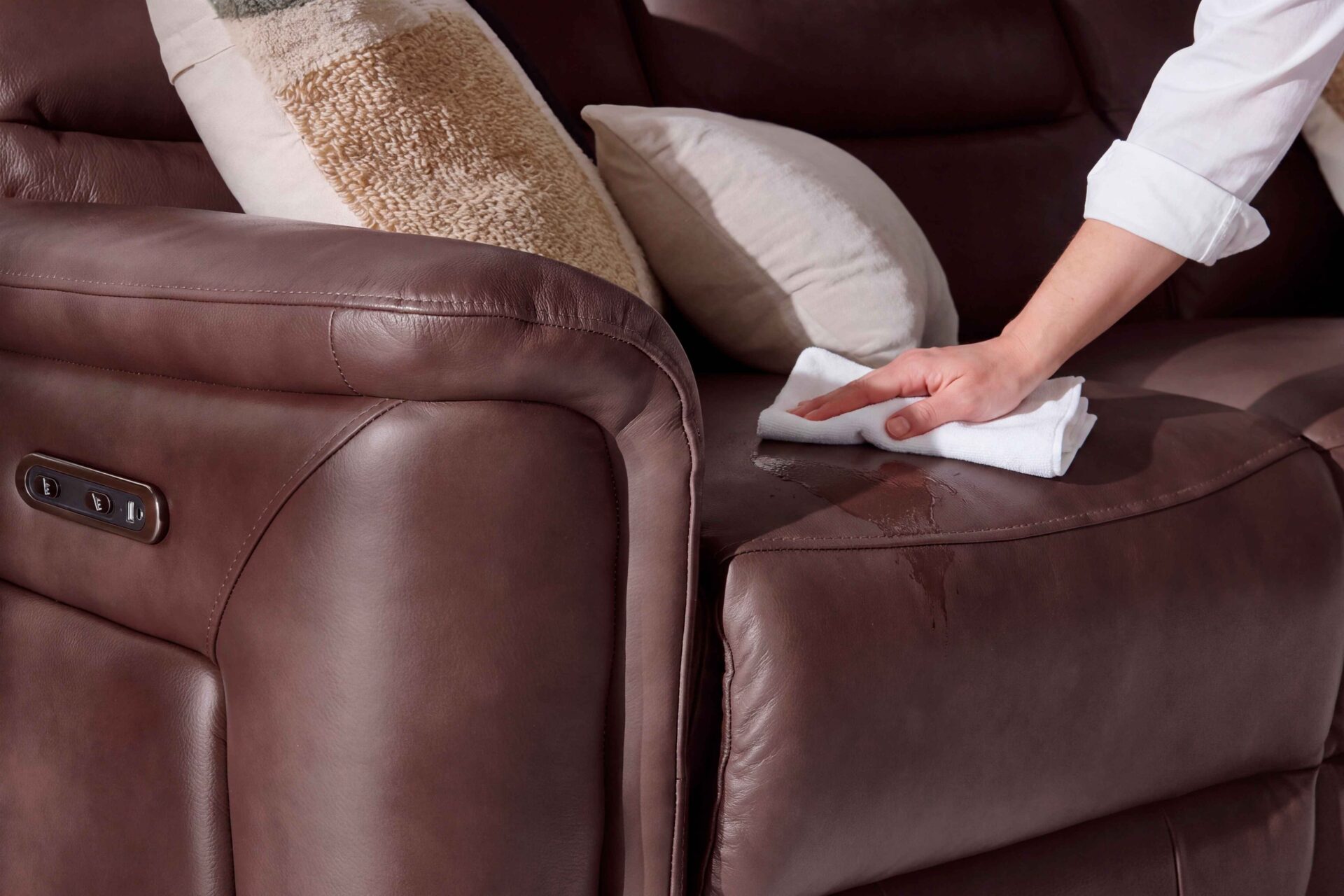
A leather sofa is always a timeless addition to your home. Naturally durable and beautifully comfortable, it develops character through everyday family life while remaining a centrepiece for years to come.
With a little regular care, you can help preserve its colour, softness, and finish. The key is to clean it gently, use products designed specifically for leather upholstery, and follow the care instructions supplied with your sofa.
Understanding your leather sofa
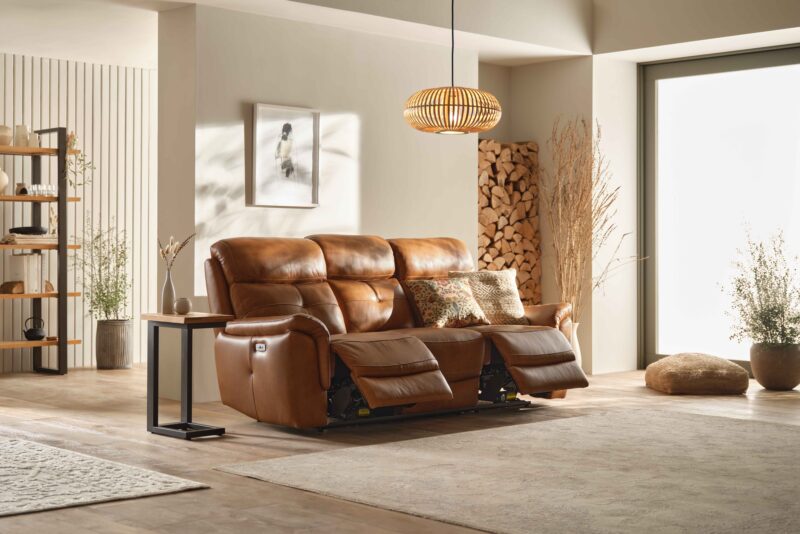
Iver leather sofa | Maine side table
Leather is a natural material, so variations in grain, colour, and texture are all part of its appeal. Over time, regular use creates gentle creases and a softer feel, giving your sofa its own unique character. These changes are completely normal, while cracking, peeling, deep scratches, and significant fading may require professional attention.
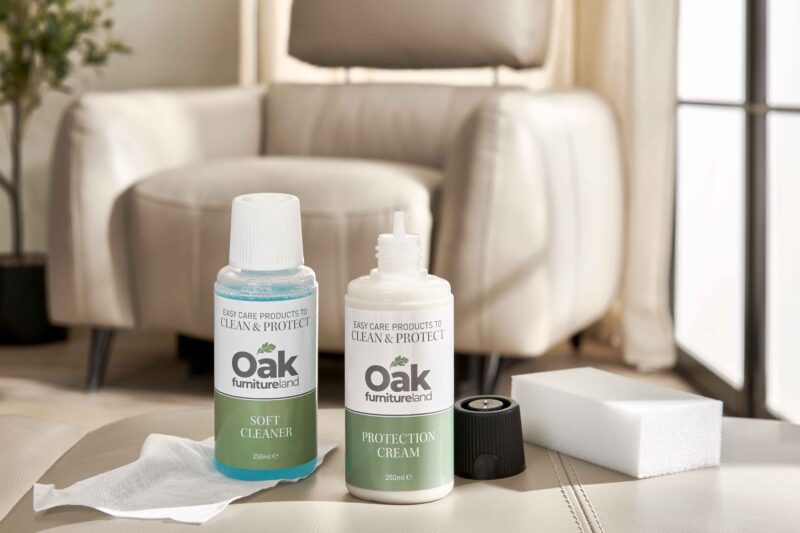
Different leather finishes respond differently to cleaning products and moisture, so it’s important to understand the type of leather you have before you begin cleaning. If you have an Oak Furnitureland leather sofa, you can find general advice in our furniture care guide and follow the instructions supplied with our leather care kit. If you’re still unsure, contact our customer service team before applying anything.
Real leather and faux leather can look similar, but they don’t always require the same care. Natural leather may benefit from conditioning to help maintain its softness, while faux leather usually doesn’t.
If your sofa is upholstered in fabric instead, see our guide on how to clean a fabric sofa.
The golden rules of leather sofa care
Looking after leather is easier than many people think. These simple habits can make a big difference over time.
- Follow the care instructions supplied with your sofa.
- Use cleaners and conditioners designed specifically for leather upholstery.
- Always use products confirmed compatible with your sofa’s fire retardant treatment.
- Clean with as little moisture as possible.
- Patch test any new products on a hidden area before use.
- Always blot spills rather than rubbing them.
How to clean a leather sofa safely
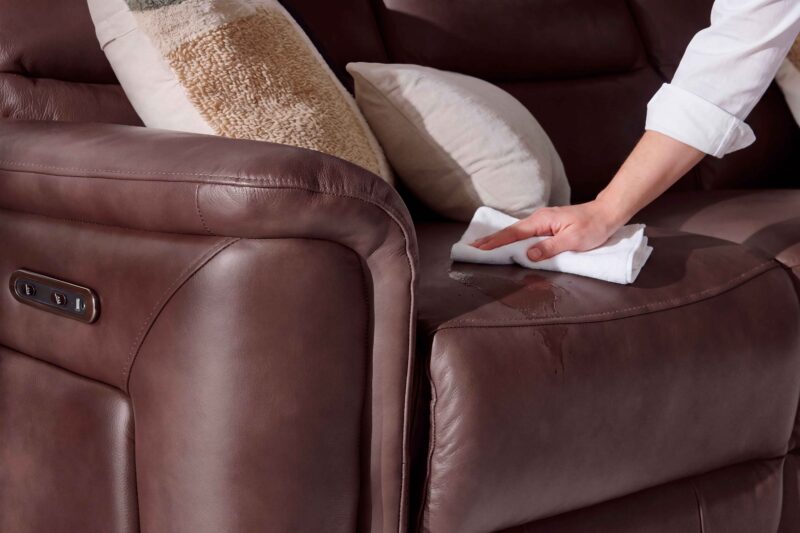
1. Remove dust and debris
Use a soft, dry cloth to wipe away dust, paying attention to the arms, seams, creases, and beneath the cushions. If your care instructions allow vacuuming, use a soft brush attachment and avoid letting hard plastic tools touch the leather.
2. Apply a suitable a leather cleaner
Apply a suitable leather cleaner to a soft cloth rather than directly onto the sofa. Working one section at a time, gently wipe the surface with the amount recommended by the manufacturer, avoiding scrubbing or saturating the leather.
When it comes to our range of leather sofas, you can use Oak Furnitureland’s leather care kit to help clean and look after your leather upholstery at home.
3. Let the leather dry naturally
Allow the leather to air dry naturally before using the sofa again. Keep it away from radiators, fires, and other direct heat sources while it dries.
4. Check the finished surface
Once the leather is dry, inspect the surface. If a stain remains, avoid repeatedly applying more product. Some marks are best treated by a professional leather cleaner.
5. Plump and rotate cushions
Rotate and plump removable cushions regularly to encourage even wear and help maintain your sofa’s shape over time.
Should you condition a leather sofa?

Marley corner chaise sofa | Otto coffee table
Leather cleaner removes everyday dirt, while conditioner helps compatible natural leather stay soft and supple. Not every leather finish requires conditioning, particularly faux leather and some protected leathers, so always choose a product suitable for your sofa.
When conditioning is recommended, apply it to a clean, dry sofa using a soft cloth and follow the manufacturer’s instructions. The frequency depends on the type of leather and how often your sofa is used, so avoid over-conditioning.
Everyday habits that help leather last longer

Taking care of your sofa doesn’t have to be time-consuming. A few simple tips can help keep it looking and feeling its best for years to come.
Keep it out of direct sunlight
Prolonged exposure to sunlight can gradually fade leather upholstery and dry out the material. Keep your sofa out of direct, bright sunshine to help reduce fading.
Keep away from heat sources
Position your sofa away from radiators, fires, and other heat sources, as direct heat can dry out leather and cause it to crack over time.
Be mindful of dark clothing and sharp objects
New denim and heavily dyed fabrics can transfer colour onto lighter leather, so take extra care until new clothes have been washed a few times. Avoid placing sharp objects such as keys and buckles, or allowing pet claws to brush against the leather.
What not to use on a leather sofa
To protect your leather, avoid using unsuitable products as they can damage protective finishes, dry out the leather or cause permanent discolouration.
- Bleach or multipurpose household sprays
- Wood furniture polish
- Baby wipes or general cleaning wipes
- Abrasive cloths, brushes, or scouring pads
- Steam cleaners
- Large amounts of water
- Washing-up liquid unless specifically approved
- Vinegar or homemade cleaning solutions
- Products intended for shoes or car interiors unless confirmed as suitable for furniture
How to deal with common leather sofa stains
Accidents happen, but acting quickly gives you the best chance of preventing a lasting stain. Always blot spills rather than rub them, then follow your sofa’s care instructions before applying any cleaning product.
Liquid spills
Soak up immediately with a clean, dry cloth. If a mark remains once the leather has dried, use a suitable leather cleaner if recommended for your sofa.
Food and crumbs
Carefully lift away solid food without dragging it across the leather. Brush away crumbs before treating any remaining marks.
Grease and oil
Blot gently to absorb as much grease as possible. Avoid household detergents or water, as these can make the stain worse. Seek professional advice if needed.
Ink and dye transfer
Stop using the item causing the transfer and avoid using household solvents, which can damage the finish. Professional treatment is usually the safest option.
Pet accidents
Soak up the area straight away and clean using a leather-safe product if appropriate. Persistent odours or stains may require professional cleaning.
Scratches and creases
Light creases and minor surface marks are a natural part of leather ageing and add to its character. Deep scratches, cracks, and peeling usually require professional repair rather than routine cleaning.
If you’re unsure of your sofa’s leather type, or if it requires recolouring or structural repairs, it’s best to consult a professional.
Keep your leather sofa looking its best

A leather sofa is designed to be lived in. With regular dusting, prompt attention to spills, and the right care products, it will continue to look and feel its best while developing the character that makes leather so distinctive.
Looking for a new sofa? Explore our sofa buying guide for expert advice on choosing the right size, upholstery, and style, or browse our collection of leather, fabric, corner, and reclining sofas to find your perfect fit.